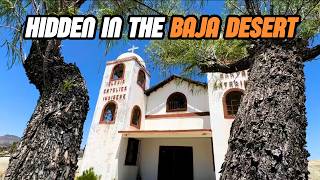
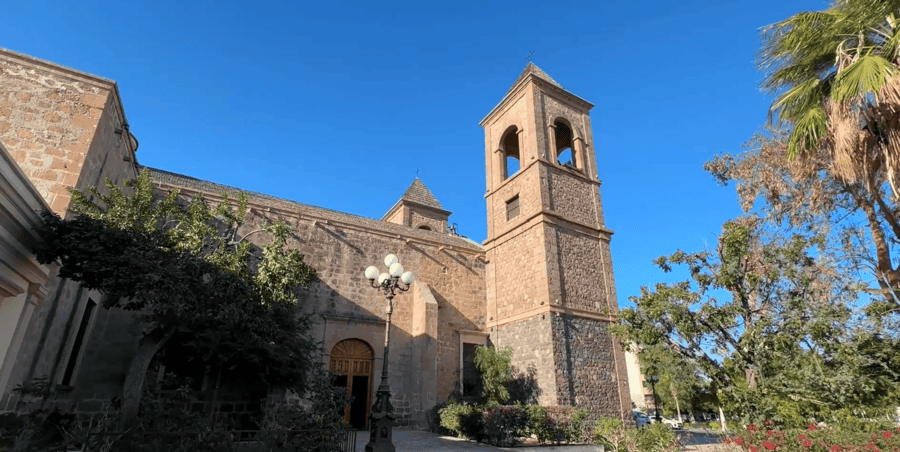
When most people think about Baja California, they probably picture beaches, desert landscapes, fishing towns, tacos, and long stretches of highway with nothing but mountains and cactus outside the window.
I think of all of those things too.
But during one of my trips through the peninsula, I became curious about something else: the old Spanish missions scattered throughout Baja. So I decided to go looking for them, and visit as many as I could.
Over the course of a month-long road trip, I visited nine historic mission sites, ranging from beautifully preserved churches in the middle of towns to crumbling ruins that required a 4×4 and some determination to reach.
And what I discovered was that the missions aren’t all alike. Some were surrounded by incredible architecture. Others were surrounded by nothing. Some were easy to find. Others felt like an adventure just getting there. And more than once, I found myself wondering: how in the world did they build this here hundreds of years ago?
A little history before we start
The mission history of Baja California goes back to the late 17th century.
The Jesuits established the first permanent mission at Loreto in 1697. After the Jesuits were expelled from the peninsula in the 1760s, the Franciscans and later the Dominicans continued the mission system. Many of the buildings we see today were constructed or completed during the 18th century.
The missions weren’t simply churches. They were centers of evangelization, agriculture, ranching, settlement, and economic activity. Water was particularly important when choosing locations, which helps explain something you’ll notice when visiting several of these places: oases and springs often play a major role in their surroundings.
But there’s another part of this history that shouldn’t be ignored.
The mission system was also part of Spanish colonization, and its arrival profoundly changed Indigenous societies in Baja California. The history involves displacement, cultural disruption, forced changes, and the loss of Indigenous ways of life. That complicated history exists alongside the architecture and surviving buildings we can see today.
For me, there’s an important distinction here: Calling a building beautiful is not the same thing as calling the history behind it beautiful.
My interest in these missions is primarily their architecture, history, location, and the experience of exploring them. I can appreciate the craftsmanship and the fact that these structures have survived for centuries without pretending that the history surrounding them was simple or universally positive.
The missions also introduced European forms of agriculture, ranching, construction, irrigation, and other technologies that became part of the development of Baja California. Those changes are part of the complicated story of the peninsula.
And that’s exactly why I find these places so interesting.
So, let’s go see nine of them.
Misión San José de Comondú
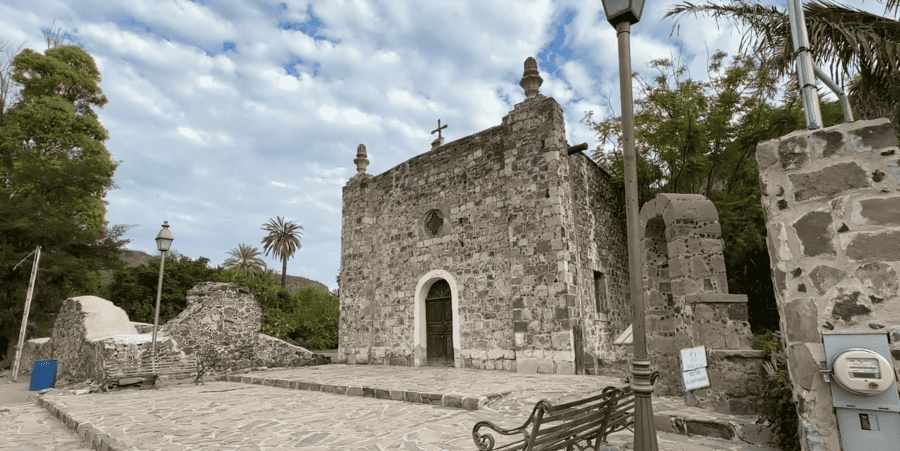
San José de Comondú was one of the first missions I visited, and my first thought was basically: How is this place so well preserved? It’s remarkably impressive considering how remote it feels.
The drive itself wasn’t particularly difficult. The road is mostly paved, and you don’t need some extreme off-road setup just to get there. But the real attraction isn’t only the mission. It’s the oasis. Baja California is famous for its incredibly dry landscape, so there’s something almost surreal about coming across a green oasis surrounded by all that desert. The contrast is one of the things I love most about exploring Baja.
San José de Comondú was founded in 1708, and the mission was eventually moved to its present location because of the area’s better supply of water and fertile land. The oasis helped make the settlement productive enough to even supply Loreto.
Standing there today, it’s hard not to appreciate why they chose this location. You’ve got an old mission, a remote oasis community, mountains, and desert all packed into one place. I’d absolutely recommend making the trip.
And honestly, one of the biggest surprises for me was realizing just how many oases exist in Baja. You can drive through what looks like an endless desert and suddenly find yourself surrounded by green vegetation and water.
Baja has a lot of surprises like that.
Misión de Nuestra Señora del Pilar de La Paz Airapí
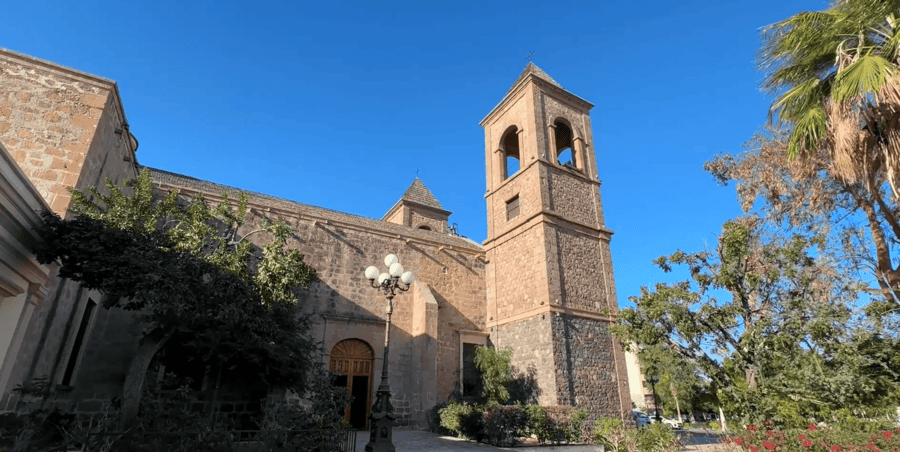
This one actually caught me off guard. When I first arrived, I didn’t even realize I was looking at a mission! It’s in La Paz, so there’s obviously a completely different feeling here compared with some of the remote missions farther north. You’re driving through a modern Mexican city rather than bouncing down a dirt road in the middle of nowhere.
I was looking at the architecture and then, just before going inside, I read a sign explaining that this was a mission. Wait… what?
That was one of those little moments that made me realize I probably hadn’t done enough homework before starting this trip.
The Mission of Nuestra Señora del Pilar de La Paz Airapí was established in 1720, during the Jesuit period of the Baja California mission system.
For me, this one is worth seeing simply because it’s part of the larger story of the missions and because it’s a reminder that these historic sites aren’t always sitting in remote desert locations. Sometimes they’re right in the middle of a modern city. And if you’re already visiting La Paz, there’s really no reason not to include it.
Misión de Nuestra Señora de Loreto Conchó
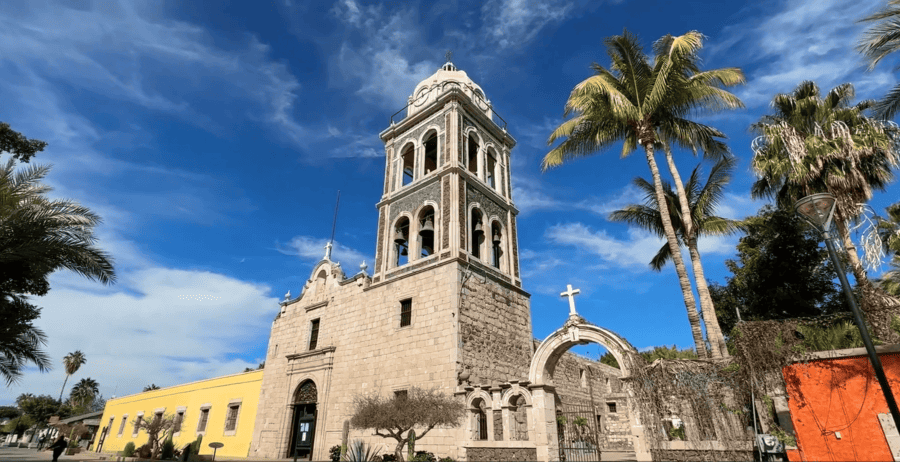
Loreto is an especially important stop on any Baja mission trip. This is where the permanent mission story in the Californias began.
Nuestra Señora de Loreto Conchó was founded in 1697 by Jesuit missionary Juan María de Salvatierra and became the first permanent mission in the Californias.
And when you stand in front of the church, knowing how old it is, that’s pretty remarkable.
My first impression was simply that it was incredibly well preserved for its age. There’s also something great about the setting. The mission sits right in the historic center of Loreto, so you don’t have to undertake some epic expedition to find it. It’s right there.
That makes this one an easy addition to a Baja road trip, but its historical importance makes it much more than a convenient stop. Loreto itself is also a beautiful town, so you can combine the mission with everything else there.
If you’re interested in the history of Baja California, I would consider Loreto one of the essential stops. This is where the whole mission story really starts to come together.
Misión San Juan Bautista — Ruins
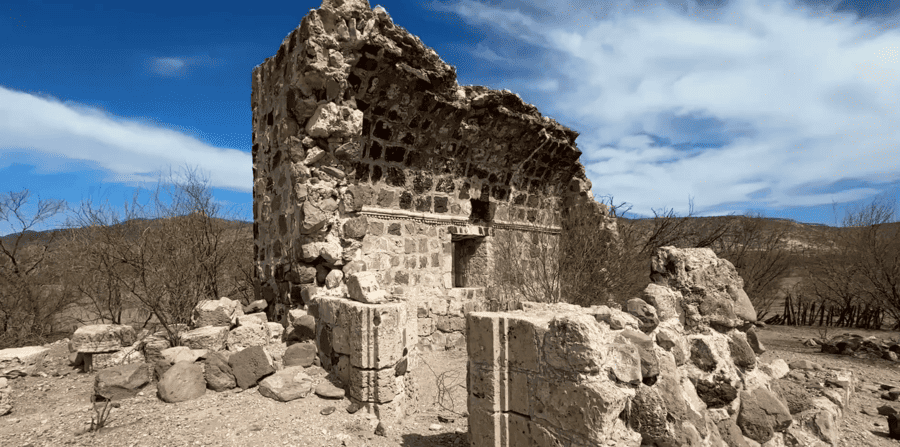
Then there are the missions where you arrive and think: “Well… not much left!”
San Juan Bautista was one of those. The remains aren’t nearly as impressive visually as some of the intact missions farther south, but that doesn’t mean they’re not worth visiting.
Getting there was relatively easy. It’s not far off the highway, and you don’t need to undertake some crazy off-road expedition to reach the site. The surroundings have more of a ranch-like feel, which makes the experience very different from visiting a beautifully restored church in a town.
I didn’t have any interaction with anyone at the site, although there were some locals across the road who seemed pretty surprised that we were filming there. And honestly, I can understand why. There isn’t a huge tourist operation surrounding this place. It’s just there. And that’s part of what makes exploring old ruins interesting to me.
You don’t necessarily need a perfectly preserved building. Sometimes it’s enough to stand there and imagine what used to occupy the site.
San Juan Bautista isn’t going to be the most visually spectacular mission on this list, but its place in Baja’s mission history makes it worth seeking out.
Misión Santa Rosalía de Mulegé
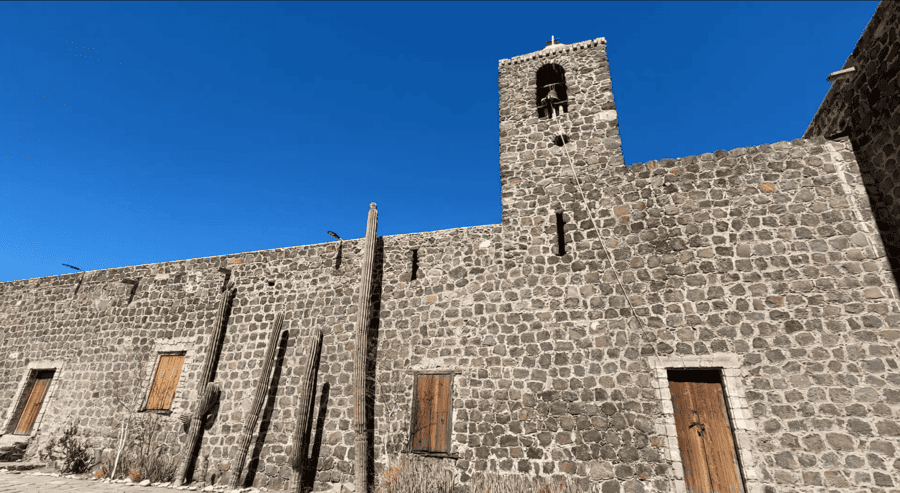
Mulegé was another completely different experience. The mission sits close to town, and as soon as you see those stone walls, you can understand why this place stands out.
It’s beautiful. And inside, it’s surprisingly cool. That was especially noticeable after being outside in the Baja heat.
But what really makes Mulegé special is the landscape around it. The mission sits in the middle of the Mulegé oasis, with the river and greenery surrounding the town. Once again, you’re confronted with that strange Baja contrast: desert mountains on one side and lush vegetation around the water.
The mission itself is beautiful enough to make the stop worthwhile, but the combination of architecture and oasis makes it even better.
This is another one I’d absolutely recommend.
Misión San Francisco Borja
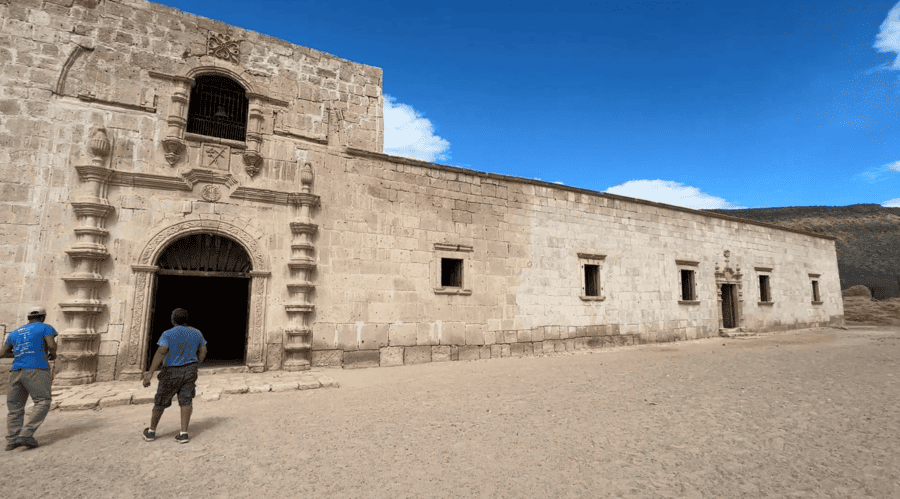
This one was different. Very different.
San Francisco Borja was probably the most adventurous mission I visited. First of all, getting there isn’t exactly a casual Sunday drive. The road is rough, with dirt and sandy sections, and I would definitely recommend a 4×4 for this trip. But then you finally arrive. And there’s this incredible stone mission sitting in the middle of nowhere. Absolutely stunning!
The mountains behind it are gorgeous, but what really gets you is the isolation. There are no big towns surrounding it. No traffic. No crowds. Just mountains, desert, the mission, and a whole lot of nothing.
It feels majestic. I remember thinking that this was exactly the kind of place I love finding on a Baja road trip.
We also had the chance to meet and have lunch with the caretakers. We chatted with them about the mission and the surrounding area, which made the visit even more memorable.
That’s something I’ve learned from traveling through Baja: sometimes the people you meet along the way become just as much a part of the story as the places themselves.
San Francisco Borja was absolutely worth the bumpy ride.
If you’re planning to visit it, though, don’t treat the road conditions casually. This isn’t the place I’d recommend tackling without the appropriate vehicle, preparation, and a little patience.
Misión San Fernando de Velicatá — Ruins
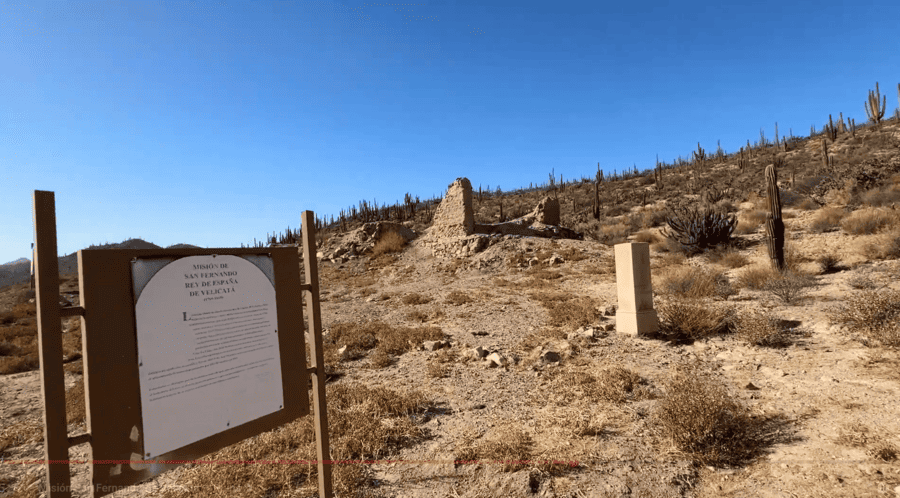
San Fernando de Velicatá was another mission where there isn’t a whole lot left. But getting there was an adventure.
The road was rough and overgrown, and my 4Runner picked up quite a few pinstripes from the vegetation. That’s just part of the deal sometimes.
The funny thing is that you can put up with all of that and then arrive at a site where you’re thinking, “That’s it?”
But then you look around. The mission ruins sit near an oasis river, and that completely changes the experience. The river and surrounding vegetation are beautiful. In fact, we even took a bath in the river. And we were completely alone. No crowds. No tour buses. Nobody around. Just us, the ruins, and the oasis.
That’s the kind of experience that doesn’t necessarily show up in a list of attractions or a tourism brochure.
The ruins themselves may not be the most impressive of the nine, but the combination of history, isolation, and landscape made this a memorable stop for me.
I’d still recommend visiting, especially if you’re interested in the history of the mission system. Just be prepared for the road. And maybe don’t bring your freshly detailed 4Runner.
Misión San Ignacio Kadakaamán
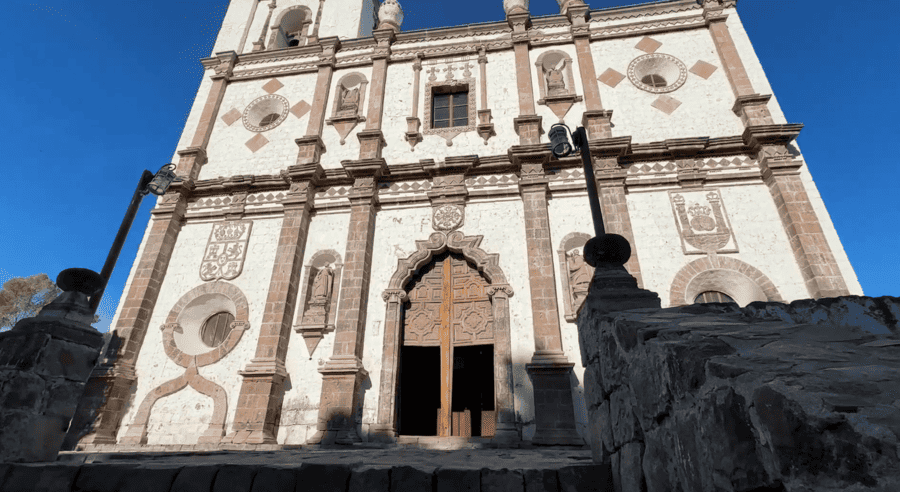
This one is my favorite. There, I said it. Of all nine missions I visited, San Ignacio was the one that really stood out to me.
The architecture is breathtaking. And the fact that it’s so incredibly well preserved makes it even more impressive.
Unlike San Francisco Borja or San Fernando, you don’t have to fight your way down some remote dirt road to get there. The mission sits right in front of the town square, making access easy. But once you’re standing there, it feels like you’ve stepped into another time. The scale and architecture are just impressive. And because the building has survived so well, it’s easier to imagine what these mission settlements must have looked like centuries ago.
I’ve visited a lot of historic places in Baja, but San Ignacio is the one that stuck with me the most.
If you only had time to visit a few missions, this would be very high on my list.
For me, it’s the favorite.
Misión San Francisco Javier de Viggé-Biaundó
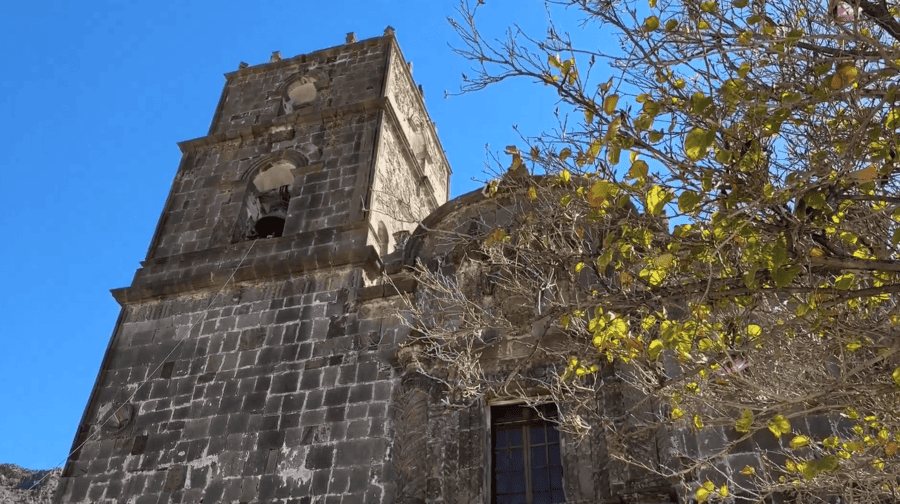
And then there’s San Francisco Javier.
This might be the mission that made me ask the biggest question of the entire trip: How the hell did they build this up here?
The mission sits high in the mountains above what is now Loreto, in a remote setting that feels almost completely disconnected from the modern world.
The original mission was established in 1699, and the stone church that stands today was built during the 18th century. The current stone structure was begun in 1744 under Jesuit missionary Miguel del Barco and completed around 1757–1758.
And it’s beautiful.
INAH describes it as a particularly important example of Baja California mission architecture, while Baja California Sur’s tourism authority calls it the “jewel of the missions of Baja California.”
But honestly, the drive up there is part of the experience. The road winds through the mountains, with beautiful scenery and stream crossings along the way. And then you arrive. Wow. It’s breathtaking.
I kept thinking about what it must have taken to build something like this in such a remote location centuries ago. There were obviously no modern roads. No trucks bringing construction materials up the mountain. No hardware store down the road when you realized you forgot something. Just imagine carrying everything up there.
We also talked with the caretaker, who I believe was named Jorge. I actually recognized him because I had seen him in a YouTube video a few months before my first visit. Those little interactions make a place feel more personal.
And then there’s the olivo tricentenario, the roughly 300-year-old twisted olive tree.
Between the architecture, the mountain setting, the road getting there, and the history, San Francisco Javier ended up being one of the most majestic missions of the entire trip.
I loved everything about it.
So which Baja mission was the best?
That’s a difficult question because each one gave me something different.
If I had to pick my personal favorite, it’s San Ignacio. The architecture is incredible, the building is remarkably well preserved, and the whole experience of standing in front of it is hard to beat.
But if we’re talking about the most impressive adventure, I’d give that to San Francisco Borja. Getting there is part of the story. The rough road, the mountains, the isolation, meeting the caretakers, and then seeing this incredible stone structure sitting in the middle of nowhere made it unforgettable.
And San Francisco Javier is right up there for architecture and setting.
Then there’s San José de Comondú, which I loved for the oasis.
And that’s really the point.
I don’t think you need to choose just one. They’re all different. They’re all special.
What surprised me most about the Baja missions
Probably the fact that I loved all of them. Even the ruins.
I went into this trip expecting some of the missions to be impressive and others to be little more than a pile of old stones. And, well… some really are little more than old stones.
But even those ruins made me stop and think about how old they are and what it took to establish settlements in these incredibly remote parts of the peninsula.
Hundreds of years later, some of those structures are still standing. That’s pretty remarkable.
The other thing that surprised me was just how much the landscape changes from mission to mission. You’ve got desert. Mountains. Oases. Rivers. Small towns. Remote ranches. And churches that sometimes seem completely out of place in their surroundings.
That’s what made this more than simply a trip to see old buildings. It became a road trip through the history and landscapes of Baja California.
What I learned from visiting them
One of the biggest things I came away with was a greater appreciation for just how difficult life must have been for the people involved in establishing these settlements. The distances alone are enormous. Then add the terrain, the lack of roads, the heat, the mountains, the scarcity of water, and the logistics of moving people and materials around the peninsula.
San Francisco Javier really drove that home for me. Standing there, high in the mountains, I couldn’t stop thinking: “How did they get all of this up here?”
But there’s another side of the story that is just as important to understand. The missions didn’t appear in an empty landscape. Indigenous peoples had already lived in and understood these environments for thousands of years. The arrival of European missionaries brought profound changes to Indigenous communities and became part of the larger process of Spanish colonization. So when I look at these buildings, I’m not trying to turn that complicated history into something simple. I’m interested in the buildings, the architecture, the landscape, and the stories they can tell us about the past.
And I think we can appreciate those things while still acknowledging the difficult history surrounding them. In fact, understanding that history makes the places more interesting, not less.
Planning a Baja California mission road trip
If you’re thinking about visiting some of these missions yourself, don’t assume they’re all going to be the same kind of trip. Some are extremely easy to reach. Loreto, La Paz, Mulegé, and San Ignacio are all accessible as part of a normal road trip.
Others are a different story. San Francisco Borja requires a rougher drive and, based on my experience, a capable 4×4 is the way to go. San Fernando de Velicatá also involved rough and overgrown roads when I visited.
Road conditions can change, of course, so don’t take my experience as a guarantee of what you’ll encounter on your trip. Bring plenty of water, fuel up when you have the opportunity, and carry extra fuel, check conditions before heading into remote areas, and give yourself more time than you think you’ll need, because – trust me – you’ll need it!
And remember that these aren’t just tourist attractions. Many of these missions are part of living communities, and caretakers and local residents look after them. Be respectful. Don’t trespass. Don’t remove anything. And if you’re fortunate enough to meet someone who takes care of one of these historic places, take the time to talk to them. You will learn something you won’t find on a sign.
Nine missions, one very long road trip
Visiting these nine missions turned out to be much more than I expected. I went looking for historic churches and ruins. What I found were remote mountain roads, desert landscapes, unexpected oases, old stone walls, friendly caretakers, forgotten ruins, and some pretty incredible stories. And that’s one of the reasons I love exploring Baja California.
You can start the day thinking you’re simply going to visit an old mission, and before you know it you’re bouncing down a dirt road, crossing a stream, taking a bath in an oasis river, or wondering how somebody managed to build a stone church on top of a mountain hundreds of years ago.
And sometimes, after spending the day exploring centuries-old Spanish missions…you may accidentally end up at a Mexican rodeo. But that’s a story from another video.
If you’re interested in Baja California road trips, historic places, abandoned places, hiking, camping, and exploring the places that make you stop and ask questions, check out more adventures here on Miles & Hikes.
Follow Your Curiosity!
![[Ep. 7 of 8] BAJA ROADTRIP: POZO ALEMAN, a fascinating 1800's Gold Rush GHOST TOWN](https://i.ytimg.com/vi/FgBzu4fT3iE/mqdefault.jpg)