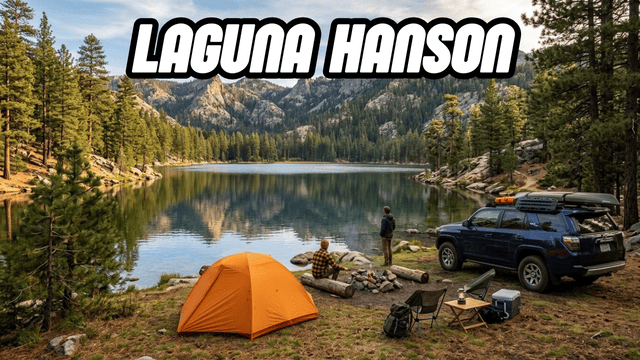
High in the Sierra de Juárez of northern Baja California, surrounded by pine forests, granite boulders and rugged mountain scenery, there is a place that feels remarkably different from the Baja California most people imagine.
It is Laguna Hanson, also known as Laguna de Andrade, inside Parque Nacional Constitución de 1857.
The lake is one of the defining features of the national park, but what makes Laguna Hanson particularly interesting is that it isn’t always the same lake. Its water level can change dramatically depending on rainfall and runoff, and during extended dry periods the lake can even disappear.
I’ve visited Laguna Hanson at different times and seen that contrast firsthand — from a nearly dry landscape to a lake holding water again, surrounded by pine trees and mountain scenery.
I’ve also camped beside the lake, explored the surrounding area, and discovered one of the more unexpected parts of the Laguna Hanson experience: sharing the campground with wandering cows.
This guide brings together what I’ve learned from visiting Laguna Hanson with information from Mexico’s Comisión Nacional de Áreas Naturales Protegidas (CONANP), so you can get a better idea of what this unusual mountain destination is like and what to expect when you visit.
Where Is Laguna Hanson?
Laguna Hanson is located inside Parque Nacional Constitución de 1857 in the Sierra de Juárez of northern Baja California, within the municipality of Ensenada.
The national park was established by presidential decree on April 27, 1962, protecting an important mountain ecosystem in northern Baja California.
CONANP — Parque Nacional Constitución de 1857
The park is particularly interesting because of how different its environment is from much of the surrounding Baja California landscape. At these elevations, pine forests, rocky mountain terrain and a seasonal freshwater lake replace the dry desert and coastal scenery that many visitors associate with the peninsula.
Laguna Hanson is the park’s principal attraction and one of the most unusual freshwater environments in Baja California.
Why Is Laguna Hanson So Interesting?
For me, part of the appeal is the contrast.
You’re still in Baja California, but this doesn’t look like the Baja most people picture.
Instead of beaches, cactus-covered desert and the Sea of Cortez, you find yourself in a high-elevation mountain environment with pine trees, cool temperatures, rocky shorelines and a freshwater lake.
And then there is the lake itself.
Laguna Hanson is not a lake that you can assume will look exactly the same every time you visit.
Its water comes primarily from precipitation and runoff from the surrounding mountains. During periods of insufficient rainfall, the lake can shrink dramatically and may even dry completely.
That means the landscape you encounter can depend heavily on what happened in the mountains before you arrived.
This changing character is one of the things that makes Laguna Hanson worth returning to.
Laguna Hanson Has Water Again
One of my Laguna Hanson trips was particularly interesting because the lake had water again after a long period when it had held very little.
I had already seen the area under much drier conditions, so returning and seeing water filling the basin again completely changed the experience.
The shoreline looked different. The surrounding mountains were reflected in the water. The landscape felt more like the mountain lake you might expect from photographs of the area.
According to CONANP’s Ramsar documentation, Laguna Hanson sits at roughly 1,600 meters above sea level and is fed primarily by runoff and seasonal flows from the surrounding mountains.
During periods of below-average rainfall, the lake can dry completely.
That explains something important about visiting Laguna Hanson:
A photograph from one year isn’t necessarily a good representation of what you’ll find the next year.
The lake itself is part of the story.
A Ramsar Wetland in Baja California
Laguna Hanson isn’t simply a scenic lake.
It is also part of a wetland recognized internationally under the Ramsar Convention.
The Laguna Hanson site was designated as a Ramsar wetland in 2010, recognizing its importance as a freshwater wetland within the Baja California peninsula.
That makes the lake particularly interesting in a region where freshwater environments are relatively scarce.
It also helps explain why protecting the surrounding landscape matters. The lake and its watershed are part of a larger mountain ecosystem rather than an isolated scenic attraction.
Camping at Laguna Hanson
Camping is one of the best ways to experience Laguna Hanson.
Instead of arriving for an hour or two and leaving, staying overnight lets you experience the lake as the light changes, temperatures drop and the campground becomes quiet.
CONANP’s management information identifies the Laguna area as a public-use zone and includes designated camping areas around the lake.
There are multiple places to camp, so it is worth exploring the area rather than automatically taking the first spot you see.
During one of my visits, I found a quieter campsite farther around the lake, away from some of the more concentrated camping areas.
That’s one of the things I like about camping here: you can get a much better sense of the landscape when you aren’t simply driving in, looking at the lake and driving back out.
What Is Camping Like?
The camping experience at Laguna Hanson is relatively straightforward, but you are still in a mountain environment.
Facilities and services are limited compared with a developed campground near a city, so you should arrive prepared with the supplies you need.
And remember that the weather can be very different from the conditions along the Baja coast.
A warm afternoon doesn’t necessarily mean a warm night.
Camping With Cows
There is another thing you should know about camping at Laguna Hanson.
There are cows.
And they apparently consider parts of the campground fair game for wandering around.
During my visit, cows moved through the camping areas and around the tents. They weren’t aggressive, and the encounters were mostly amusing, but they are still large animals and should be given plenty of space.
This is also a good reminder that you’re visiting a natural area where domestic animals and wildlife can both be part of the landscape.
Don’t feed them, don’t chase them, and don’t leave food scattered around your campsite.
What Is the Weather Like?
Laguna Hanson is high in the mountains, so don’t plan your visit based solely on the weather in Ensenada or along the coast.
The park has a cooler mountain climate, and winter conditions can include snow.
That can make the landscape spectacular, but it can also make access considerably more difficult.
Heavy snow and other severe weather can affect roads and may lead to temporary access restrictions.
The weather also matters because precipitation in the mountains directly affects the lake.
A rainy or snowy season can transform Laguna Hanson, while extended dry conditions can leave the lake dramatically reduced or even completely dry.
If you’re planning a trip, check current weather and access conditions before heading into the mountains.
Getting to Laguna Hanson
Getting to Laguna Hanson is part of the adventure.
You’re heading into a mountainous protected area rather than simply pulling off a major highway at a developed tourist attraction.
Road conditions can vary with weather, particularly after heavy rain or snow.
That means an old travel report shouldn’t be treated as a guarantee of current conditions.
Before leaving, check current information from CONANP and make sure your vehicle, fuel, navigation and emergency supplies are appropriate for the trip.
There are also limited services once you’re inside the park, so don’t assume you’ll be able to easily find fuel, food or other supplies after entering the mountain area.
Things to Do at Laguna Hanson
Camping is the obvious attraction, but there is much more to do here.
Explore the Lake
Walking around the shoreline is one of the simplest ways to experience Laguna Hanson.
When the lake contains water, the reflections and changing perspectives make the landscape particularly photogenic.
When water levels are low, the exposed shoreline gives you a completely different view of the basin.
Both versions are interesting.
Go Hiking
The park offers hiking and other outdoor activities, including opportunities to explore the surrounding mountain landscape.
You don’t need to plan an extreme expedition to enjoy the area.
One of the things I like about Laguna Hanson is that you can make the trip as simple or ambitious as you want.
You can camp, walk around the lake, explore the forest and spend time simply taking in the scenery.
Explore the Mountain Landscape
CONANP lists a variety of recreational activities within the park, including hiking, mountain biking, rock climbing, mountaineering, flora and fauna observation and rappelling.
That makes Laguna Hanson more than a single-destination lake trip.
The lake is the obvious centerpiece, but the surrounding Sierra de Juárez is really the larger attraction.
Watch for Wildlife
The park protects habitat for a variety of wildlife.
Visitors may encounter animals such as mule deer, coyotes, bobcats and other species associated with the mountain environment.
You shouldn’t expect to see everything on a single visit, but knowing that you’re sharing the landscape with wildlife adds another dimension to exploring the park.
And, of course, there are the cows.
What Should You Bring?
Laguna Hanson is not the place to arrive completely unprepared.
For a camping trip, I would bring:
- Warm layers, even if the daytime forecast looks comfortable
- A sleeping bag appropriate for the expected overnight temperatures
- Plenty of food and water
- Reliable navigation
- Flashlights or headlamps
- Camping equipment suitable for changing mountain weather
- Basic emergency supplies
- Extra fuel and vehicle supplies
- A way to secure food
- Trash bags so you can pack out everything you bring in
If you’re visiting during winter or after significant rain or snow, pay particular attention to road conditions and the capability of your vehicle.
Protecting Laguna Hanson
Laguna Hanson is part of a protected national park, so visiting responsibly is important.
CONANP’s visitor guidance emphasizes using designated camping areas, following established trails and avoiding disturbance to wildlife and vegetation.
That means:
- Camp only where permitted
- Use fires only in designated areas and follow current park rules
- Don’t feed wildlife
- Don’t disturb animals
- Stay on established trails where required
- Pack out your trash
- Don’t remove plants, rocks or other natural features
- Leave the area as you found it
The best way to preserve a place like Laguna Hanson is to leave it looking like you were never there.
Is Laguna Hanson Worth Visiting?
Yes — particularly if you want to experience a completely different side of Baja California.
What makes Laguna Hanson interesting isn’t that it’s a lake. It’s the combination of things. A freshwater mountain lake. Pine forests. Granite and rocky mountain terrain. Camping. Wildlife. Changing weather.
And a lake whose appearance can change dramatically depending on rainfall.
It’s also one of those places that rewards curiosity. You can visit simply because you want to see the lake. Or you can start asking questions:
Why is there a freshwater lake here? Where does the water come from? Why does the lake sometimes disappear? What lives in the surrounding forest? What does the landscape look like after a wet winter? And what will you actually find when you arrive?
Those are the questions that make the trip interesting to me.
My Laguna Hanson Videos
I’ve made several videos exploring Laguna Hanson and the surrounding area, each showing a different side of the destination.
Laguna Hanson: Camping With Cows and Pine Trees
On this trip, I camped beside Laguna Hanson and explored the surrounding landscape.
The lake, pine forest and mountain scenery made this one of those Baja camping trips that feels completely different from camping along the coast.
Laguna Hanson Has Water Again
Another visit focused on the changing lake itself.
After a long period when Laguna Hanson had very little water, I returned to see what the area looked like when the lake had filled again.
Laguna Hanson After the Storm
I also explored the area after a major storm and wondered whether the rainfall had finally brought significant water back to the lake.
Together, the videos show something that photographs and static information can’t quite capture:
Laguna Hanson changes.
And sometimes the only way to find out what it looks like is to go there.
Questions About Laguna Hanson
Does Laguna Hanson always have water?
No.
Laguna Hanson is a seasonal freshwater lake whose water level depends heavily on precipitation and runoff from the surrounding mountains. During extended dry periods, the lake can shrink dramatically and may dry completely.
Is Laguna Hanson good for camping?
Yes. Camping is one of the main recreational uses of the park, and designated camping areas are located around the Laguna Hanson area.
Can you hike around Laguna Hanson?
Yes. The surrounding national park provides opportunities for hiking and exploring the mountain environment.
Is Laguna Hanson cold?
It can be, particularly at night and during the winter. Remember that Laguna Hanson is at high elevation compared with the surrounding coastal areas of Baja California.
Are there animals around the campground?
Yes. You may encounter wildlife, and during my visits I also encountered plenty of cows wandering through the camping areas.
Can I visit Laguna Hanson year-round?
Access depends on conditions. Winter snow, storms and poor road conditions can affect access, so check current information before traveling.
Is Laguna Hanson part of a national park?
Yes. Laguna Hanson is inside Parque Nacional Constitución de 1857, a protected natural area administered by CONANP.
Laguna Hanson: A Different Side of Baja
Most people who think about Baja California probably picture the coast.
And for good reason.
But one of the things I enjoy most about exploring Baja is discovering how different the peninsula can be from one region to another.
Laguna Hanson is a perfect example.
You can spend the morning surrounded by pine trees at a mountain lake and, after leaving the mountains, eventually find yourself back in the dry landscapes that make Baja famous.
The lake itself is constantly changing, too.
That’s what makes it worth returning.
The next time you see a photograph of Laguna Hanson, there is no guarantee that the lake will look exactly like that when you arrive.
And honestly, I think that’s part of the fun.
You don’t always know what you’re going to find.
You just have to go see.
Official Information
For current information about Parque Nacional Constitución de 1857, including park regulations and visitor information, check the official CONANP resource before your trip:
CONANP — Parque Nacional Constitución de 1857
Laguna Hanson is a protected natural area, so conditions, fees, access and park rules can change. Always verify current information before traveling.
Follow your curiosity.
Baja California Travel FAQ
Planning a trip to Baja California for the first time? Here are some of the questions I get asked most often, based on my own experience traveling and exploring Baja since 2011.
Is Baja California safe to travel?
In my experience, yes. I have been traveling throughout Baja since 2011, usually driving from Los Angeles, crossing the border by myself, and exploring all over Baja. I have never had an incident crossing into Mexico or returning to the United States, and I have never personally had a serious problem while traveling through Baja.
That doesn’t mean every part of Mexico is equally safe, or that nothing can ever happen. The same common sense you would use at home applies here. Don’t be flashy, pay attention to your surroundings, trust your instincts, and if a place feels wrong or unsafe, leave.
There is a lot of media coverage that can make it seem like Mexico is dangerous everywhere. Cartels and crime are real issues, but that doesn’t mean travelers are constantly encountering them. In my experience, Baja is generally peaceful and welcoming, and all of my trips have been completely uneventful.
For a more detailed look at safety in Baja, read Is It Safe to Travel in Baja California?
Is it safe to drive around Baja?
I have driven thousands of miles throughout Baja, from the border with the USA to Los Cabos and back, including on the main highways, small towns, and into remote areas.
For first-time visitors, I recommend keeping things simple: travel during daylight, stay on established routes unless you know where you’re going, and make sure you have enough fuel, water, and basic emergency supplies before heading into remote areas.
If you are going off-road, remember that many dirt roads in Baja are poorly maintained or completely unmaintained. You are responsible for being prepared for the conditions you encounter.
Should I drive at night in Baja?
Personally, I avoid it.
One of the biggest reasons isn’t even crime — it’s the roads. Animals can and do wander onto the highway, sometimes appearing directly in your path with very little warning. Cows, horses, donkeys, and other animals are a serious hazard after dark.
If you’re unfamiliar with an area, daylight also gives you much better visibility and generally means you’ll encounter more people and traffic along the way.
My advice is simple: when possible, plan your driving so that you arrive before dark.
Do I need a 4×4 to travel around Baja?
Not necessarily.
If you’re visiting popular destinations and staying on the main highways and established roads, a normal 2WD vehicle is perfectly adequate for a huge portion of Baja.
A 4×4 or high-clearance vehicle becomes much more important if you want to explore dirt roads, especially places that are far from paved highways or services. Some remote destinations, including missions such as San Borja for example, require considerably more preparation.
Always research the specific road before heading out. Conditions can change, and a road that was easy during one season can become very difficult after weather or other changes. And you most definitely don’t want to be stranded at a road in the middle of nowhere, and little to no traffic
What should I carry in my vehicle when exploring Baja?
If I’m heading into remote areas, there are a few things I don’t leave home without:
- Tire repair kit
- Tire inflator
- Battery jumper
- First-aid kit
- Plenty of drinking water
- Extra food
- Extra gasoline when traveling far from fuel
- Reliable navigation and/or offline maps
Your vehicle is your biggest piece of safety equipment when you’re traveling far from towns and services. Before you even leave home for Baja, make sure your vehicle is properly serviced and in good mechanical condition. Check your tires, brakes, fluids, battery, and spare tire, and take care of any maintenance issues before crossing the border.
A little preparation can make a huge difference if something goes wrong, especially when you’re traveling through remote areas where getting help or finding a repair shop may not be easy.
For a more complete packing and preparation list, see my Baja Road Trip Essentials Guide.
You can also browse the Miles & Hikes gear and products I use and recommend.
How much cash should I carry in Baja?
Carry cash.
Major cities and tourist areas have plenty of ATMs and businesses that accept cards, but once you start traveling through smaller towns and more remote areas, you cannot always rely on them.
I also recommend carrying plenty of smaller denominations. Even businesses in larger cities can struggle to make change, so having smaller bills and coins can make things much easier.
Never start a Baja road trip assuming that your card will work everywhere.
Can I use credit cards in Baja?
Yes, especially in larger cities, hotels, restaurants, supermarkets, and many tourist-oriented businesses.
But don’t rely on cards exclusively. Smaller businesses, roadside stops, rural communities, and remote areas may only accept cash, and some smaller towns may not have an ATM at all.
Having pesos with you gives you a lot more flexibility.
Do I need to speak Spanish to travel around Baja?
You don’t need to be fluent.
I speak Spanish myself, so I can’t personally say what it feels like to travel through Baja without speaking the language at all. However, in many tourist areas and larger towns, you’ll find people who speak at least some English.
That said, learning some basic Spanish will make your trip easier and more enjoyable. Even a few simple phrases can go a long way, and people generally appreciate the effort.
What should I know about police and military checkpoints?
Military and National Guard checkpoints are a normal part of traveling through Baja and are commonly found along major highways. They may ask where you’re going, where you’ve been, and may inspect your vehicle.
For more information about checkpoints, dealing with police, and other situations travelers should be aware of, read my Baja California Travel Safety and Scams Guide.
What scams should travelers watch out for in Baja?
As with anywhere that receives tourists, scams do exist in Baja. That doesn’t mean you should be afraid to visit — it means you should know what to look out for.
I’ve put together a separate guide covering situations travelers should be aware of, including police interactions, military checkpoints, cash and ATMs, taxis, fake guides, border-area scams, and other common situations.
What if something feels wrong while I’m traveling?
Trust your instincts.
This is probably the simplest piece of advice I can give anyone traveling anywhere, not just Baja.
If a location, situation, person, or interaction makes you uncomfortable, you don’t have to stay. Leave, change your plans, or move somewhere else.
You don’t need to prove that something is actually dangerous before deciding that you don’t want to be there.
Where can I find more Baja travel resources?
I’ve put together free and practical resources for exploring Baja California, including travel guides, safety information, packing advice, and other useful tools.