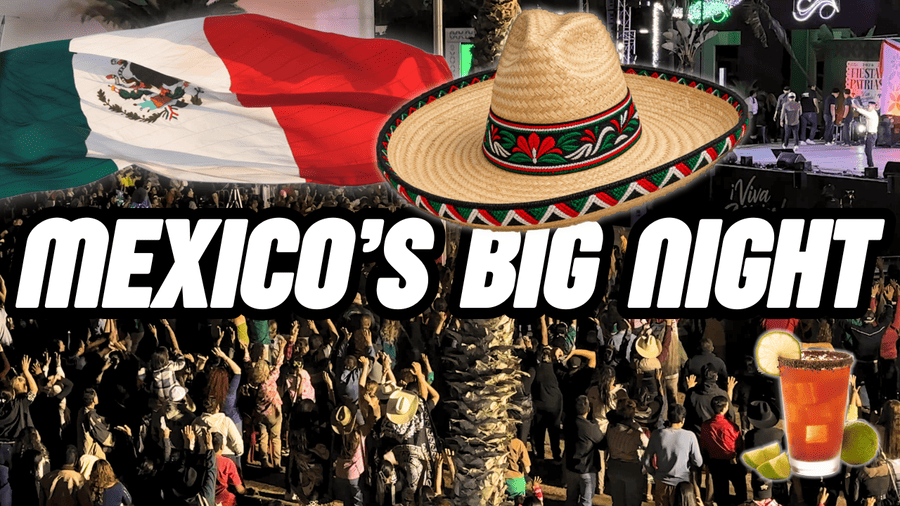
Every September, Mexico gets a little louder, and a lot more colorful!
Flags appear everywhere. Streets and plazas fill with people. Restaurants and food stands prepare traditional dishes, music plays late into the night, and cities across the country hold celebrations leading up to one of Mexico’s most important national traditions: El Grito de Independencia.
But if you’re visiting Mexico, you might have a simple question: What exactly is El Grito?
And why does Mexico celebrate it on the night of September 15 when Mexican Independence Day is September 16?
I’ve attended El Grito in Ensenada, Baja California, a couple times, but in 2026 I decided to document the celebration more extensively for my main English YouTube channel Miles & Hikes as well as my Spanish Channel.
What I found was much more than a short ceremony. It was an enormous community celebration with thousands of people, traditional dancing, music, food, and, of course, the famous Grito itself.
So let’s take a look at what El Grito is, where the tradition comes from, and what it’s like to experience it in Mexico.
What Is El Grito?
El Grito de Independencia, often simply called “El Grito”, is the annual Mexican ceremony commemorating the beginning of Mexico’s independence movement against Spanish colonial rule.
The historical event behind the celebration took place in the town of Dolores, in what is now the state of Guanajuato, during the early morning hours of September 16, 1810.
Miguel Hidalgo y Costilla, a Catholic priest, called on the people of Dolores to rise against the authorities of New Spain. The event became known as the Grito de Dolores, or “Cry of Dolores.” It is considered the beginning of the Mexican War of Independence.
More than two centuries later, Mexicans commemorate that moment every year with a ceremony that has become one of the country’s biggest national celebrations.
The interesting part is that the ceremony doesn’t actually take place on September 16. It takes place on the night of September 15.
Why Does Mexico Celebrate El Grito on September 15?
This is one of the most common points of confusion for visitors. The historical Grito occurred in the early morning of September 16, 1810. The modern ceremony, however, is held late on the night of September 15, usually shortly before midnight. Over time, the commemoration evolved into the nighttime ceremony we know today. The tradition of holding the ceremony on the 15th became firmly established, and today the evening of September 15 is when communities across Mexico gather for their Fiestas Patrias celebrations.
So, in simple terms:
September 15: El Grito and the big nighttime celebration.
September 16: Mexican Independence Day and the anniversary of the beginning of the independence movement.
That distinction is easy to miss if you’re seeing the celebration for the first time.
What Happened in 1810?
The story begins in the final years of Spanish colonial rule. A group of conspirators in what was then called “New Spain”, was planning an uprising against the colonial government. Among those associated with the movement were Miguel Hidalgo, Ignacio Allende, Juan Aldama, and Josefa Ortiz de Domínguez.
The conspiracy was discovered before the planned uprising could take place. Josefa Ortiz de Domínguez managed to get word to the conspirators that their plans had been uncovered. That forced them to act much earlier than originally intended. Miguel Hidalgo then called people together in Dolores. He rang the church bell and called on the people to join the uprising. Exactly what Hidalgo said during that famous moment has been debated by historians, and there is no surviving verbatim transcript of his original speech. The modern ceremony therefore isn’t a literal recreation of a speech that can be repeated word-for-word.
Instead, it is a symbolic reenactment of his call to action. That distinction is important because the words you hear during a modern Grito are not necessarily the exact words Hidalgo spoke in 1810.
What Happens During El Grito?
The basic ceremony is surprisingly simple. A public official—depending on the location, the president, governor, mayor, or another representative—appears before a crowd carrying the Mexican flag. The official rings a bell and delivers a series of patriotic calls, usually naming heroes of the independence movement before finishing with repeated cries of:
¡Viva México!
The crowd responds:
¡Viva!
The exact words vary from place to place.
At the national ceremony in Mexico City, for example, the list of names and phrases can change from year to year. At local ceremonies, municipalities may recognize different historical figures or include references that are meaningful to their particular community.
The ceremony is followed by the Mexican National Anthem and usually continues with music, fireworks, concerts, dancing, food, and other festivities.
In other words, El Grito is both a historical commemoration and a huge public celebration.
Why Is There a Bell?
The bell is one of the most recognizable symbols of El Grito.
According to the traditional account, Miguel Hidalgo rang the bell at the parish in Dolores to summon the people before delivering his call to action.
Today, the bell is symbolically recreated during El Grito ceremonies throughout Mexico.
The original bell associated with Hidalgo was moved to Mexico City in 1896 during the presidency of Porfirio Díaz. It was installed at the National Palace, where it became part of the national Independence Day ceremony.
That is why watching El Grito from Mexico City includes one particularly recognizable moment: the president appears on the balcony of Palacio Nacional, rings the bell, and leads the crowd in the traditional patriotic calls.
But you don’t have to be in Mexico City to experience El Grito. Every year, cities and towns throughout Mexico hold their own versions.
El Grito in Ensenada, Baja California
This is where my own experience comes in.
I’ve attended El Grito in Ensenada before—this was probably my second or third—but 2026 was the first time I decided to cover the celebration more extensively for Miles & Hikes.
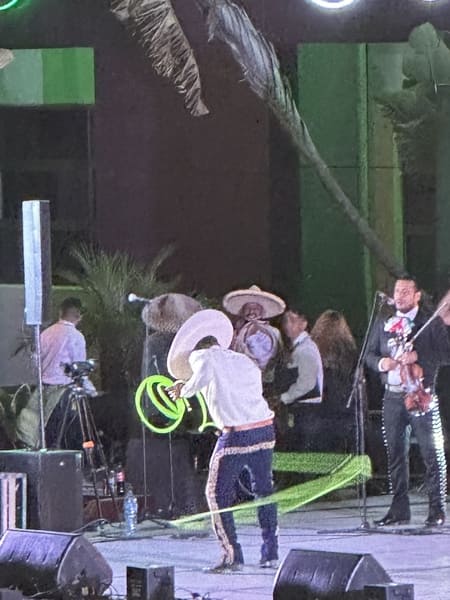
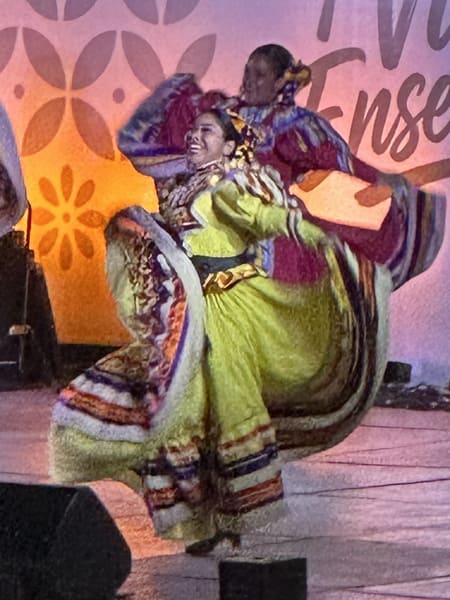
The celebration took place at the Centro de Gobierno in Ensenada, where thousands of people gathered for the evening. The atmosphere was cheerful and very much felt like a giant community party. People came with friends and family, and the crowd continued to grow as the evening went on.
According to some sources I read, approximately 9,000 people attended the 2026 celebration.
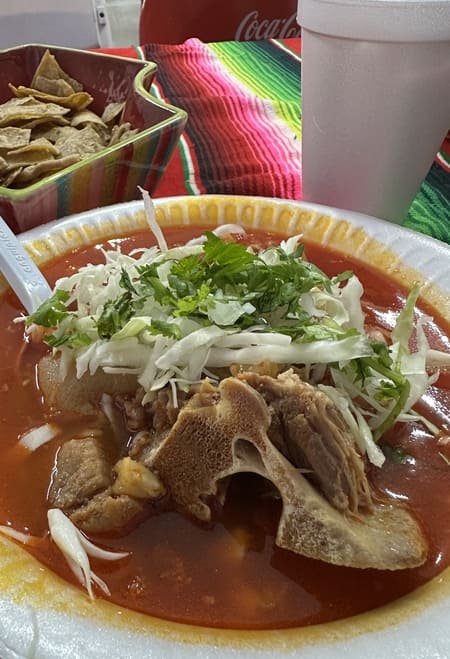
Before the Grito itself, there was plenty happening. We started by looking for something to eat, then watched traditional dances and performances as the crowd gathered. Eventually came the main event.
The municipal president, Claudia Agatón Muñiz, delivered Ensenada’s Grito de Independencia from the stage. Her 2026 arenga recognized several of the historical figures associated with Mexico’s independence before ending with repeated calls of ¡Viva México! The crowd responded to each one.
After the ceremony, the celebration continued with a performance by La Sonora Dinamita, which brought thousands of people together to dance and sing.
And that is something that can be easy to miss if you only think of El Grito as a five-minute historical ceremony.
The ceremony is really the centerpiece of a much bigger night.
What Do People Do on September 15 in Mexico?
There isn’t one single way to celebrate.
Different cities and families have their own traditions, but public celebrations commonly include food, music, dancing, fireworks, concerts, patriotic decorations, and large gatherings in central plazas.
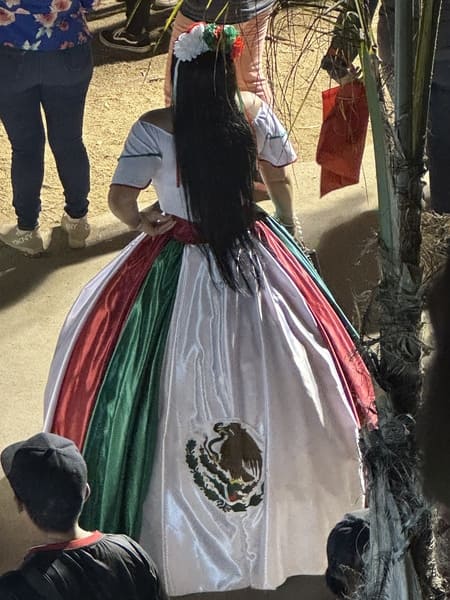
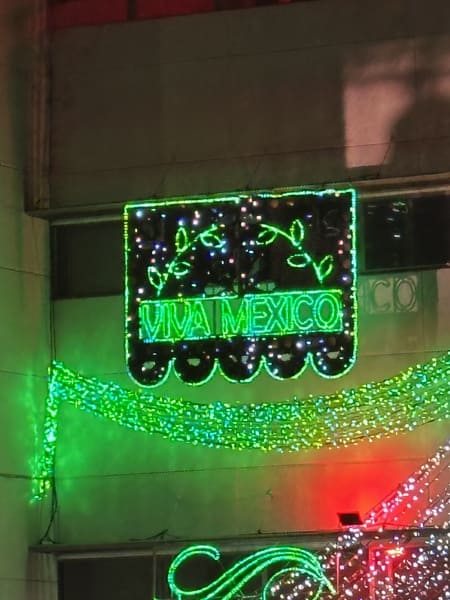
Mexican flags are everywhere. You’ll see people wearing green, white, and red, along with traditional clothing and other patriotic decorations.
Food is also a major part of the evening. Depending on where you are in Mexico, you might find pozole, tacos, tamales, tostadas, enchiladas, pambazos, elotes, buñuelos, and countless regional specialties.
For many people, the evening is as much about getting together with family and friends as it is about watching the ceremony itself. That’s one reason the atmosphere can feel more like a giant neighborhood party than a formal historical commemoration.
What Does “¡Viva México!” Mean?
Literally, “¡Viva México!” means “Long live Mexico!”
During El Grito, the phrase becomes a call-and-response.
The official calls out a patriotic phrase:
¡Viva México!
And the crowd answers:
¡Viva!
It is repeated several times, usually with the energy increasing each time.
The official may also call out the names of independence heroes.
At the 2026 national ceremony, for example, President Claudia Sheinbaum included Miguel Hidalgo, Josefa Ortiz, José María Morelos, Leona Vicario, Vicente Guerrero, Gertrudis Bocanegra, and others in her arenga.
Local ceremonies can have their own versions.
That’s part of what makes attending El Grito in different cities interesting: the basic structure is recognizable, but the details can change.
What Is the Difference Between El Grito and Mexican Independence Day?
The simplest way to remember it is:
El Grito is the celebration on the night of September 15. September 16 is the anniversary of the beginning of Mexico’s Independence movement.
The two are closely connected, so people often refer to the entire celebration as Mexican Independence Day. But technically, September 15 is the night of El Grito, while September 16 commemorates the beginning of the independence movement.
And the distinction becomes obvious when you’re actually in Mexico. On the evening of September 15, the plazas are packed. At midnight, the Grito takes place. Then September 16 brings its own civic ceremonies and commemorations.
El Grito Isn’t the Same Everywhere
One of the things I find interesting about El Grito is that there isn’t just one celebration. There is the famous national ceremony at Palacio Nacional in Mexico City, but municipalities throughout the country hold their own events.
The official leading the ceremony changes. The names included in the arenga can change. The entertainment changes. The food changes. Even the scale of the celebration can vary enormously.
A small town might have a relatively intimate gathering in its central plaza. In fact, in 2024 I experienced El Grito in the tiny town of El Porvenir in the Valle de Guadalupe, and the atmosphere there was very different from the thousands of people who gathered in Ensenada.
A major city can turn the evening into a massive public festival. In Ensenada, the 2026 celebration combined the traditional ceremony with dancing, food, live music, and a major performance by La Sonora Dinamita.
That combination of history and modern celebration is what makes the night so distinctive.
The Day After El Grito
The celebrations don’t necessarily end when the Grito is over. The following day, September 16, brings additional civic ceremonies and events.
In Ensenada, I also went to the beautiful Centro Cultural Riviera the following day to see the light show. It was a completely different atmosphere from the huge crowd at the Centro de Gobierno the night before, but it was still part of the larger Fiestas Patrias celebration surrounding Mexico’s Independence Day.
That was one of the things I enjoyed about covering the event this year.
Instead of seeing El Grito as one isolated ceremony, I got to see it as part of several days of celebrations around the city.
Why Is El Grito Important?
For someone visiting Mexico, it can be tempting to think of September 15 simply as a big party. And don’t get me wrong—it certainly is a party!
But underneath the music, food, dancing, fireworks, and crowds is a historical event that fundamentally changed the country. And Mexico’s story is also part of a much larger chapter in the history of the Americas. From the United States to Argentina (my own country!), independence movements across the continent shared many of the same themes: colonial rule, resistance, political upheaval, and the desire for self-government. Each country’s history was different, but there is a shared spirit and history connecting these struggles for independence.
The Grito commemorates the beginning of a conflict that ultimately led to Mexican independence from Spain. The independence movement did not end in 1810. The struggle continued for more than a decade, and Mexican independence was ultimately achieved in 1821. The beginning of that process, however, is commemorated every September 16.
That’s why you’ll see the names of Hidalgo, Morelos, Allende, Aldama, Josefa Ortiz de Domínguez, Leona Vicario, and other figures repeated during the ceremonies.
The modern Grito isn’t simply a reenactment of one speech.
It’s a ritual that connects modern Mexico with the beginning of its independence movement—and with a much larger story of independence that transformed the Americas.
Experiencing El Grito in Ensenada
For me, the most interesting part of covering El Grito this year was seeing how quickly a historical ceremony turns into a giant community celebration.
We arrived, looked for food, watched traditional dances, and waited as more and more people filled the area. Then came the ceremony itself.
For a few minutes, everyone’s attention turned toward the stage. The bell rang. The names of the heroes of independence were called out. And thousands of people answered:
¡Viva!
Then, almost immediately, the atmosphere shifted back into celebration.
Music started. People danced. And La Sonora Dinamita took the stage.
The city reported that around 9,000 people attended the event, and standing in the middle of that crowd made it easy to understand just how big the celebration had become.
It’s one thing to read about El Grito. It’s another thing entirely to stand in a Mexican plaza and hear thousands of people shout ¡Viva México! together.
Watch El Grito in Ensenada
I filmed the 2026 celebration in Ensenada for Miles & Hikes, including the search for food, traditional dances, the Grito itself, the performance by La Sonora Dinamita, and the light show at Centro Cultural Riviera.
If you’re interested in seeing what El Grito actually looks and sounds like from the middle of the celebration, the video gives you a much better sense of the atmosphere than photographs or descriptions can.
Final Thoughts
El Grito is one of those Mexican traditions that makes more sense once you experience it in person. The history is important, but so is everything surrounding it.
The food. The music. The dancing.The flags. The families and friends gathering together. The anticipation as midnight approaches. And finally, the moment when an entire crowd answers ¡Viva!
The historical event happened more than 200 years ago, but every September 15, communities throughout Mexico recreate the call in their own way.
In Ensenada, I got to experience that tradition with thousands of other people.
And after attending El Grito several times, this was the first time I really stopped to document the entire experience—from looking for food and watching traditional dances to the ceremony itself, the music afterward, and the celebrations continuing into the following day.
That’s what makes traveling interesting to me. Sometimes you don’t need to go looking for a famous destination. You just need to follow a question.
And this time, the question was: What is El Grito?